

Abundant Manufacturing
Our food and material systems depend on resource-intensive production and fragile supply chains, both of which are increasingly vulnerable to a volatile climate. We have an opportunity to produce a sustainable abundance of food and materials with greater speed, precision and flexibility.
Opportunity seeds
Within opportunity spaces, but outside the direct scope of our programmes, ARIA funds opportunity seeds: flexible funding of up to an initial £500k for speculative and ambitious research aligned to the opportunity space.
Explore Angie's opportunity seed projects
In this portfolio we're funding 14 opportunity seeds, from landmine-clearing plants to leveraging stochasticity in synthetic biology.
Find out where the opportunity lies – read Angie's perspective.
Fast-Track Crop Improvement: Breaking Free from Tissue Culture
Sofia Kourmpetli, Cranfield University
Green PROTACs – Enabling Small Molecule (Re)programming and Manipulation of Plant Biology
Piers Hemsley, University of Dundee
A Universal Endosymbiont-Mediated Transient Gene Expression Platform for Plants
Ari Sadanandom, Durham University + Adriana Botes, Azotic Technologies
PlantPlug: Bioengineering Parasitic Plants into Programmable Modules
Pallavi Singh, University of Essex
CRY for Crop Development and Remote Control
Daniel Kattnig, University of Exeter
Idioblast Switch
Nicholas Holton, Hypocotyl Ltd
Programmable Plant Immunity by Design
Tolga Bozkurt, Imperial College London
Cross-Kingdom Immunity: Upgrading and Rewiring Plant Defenses
Philip Carella, John Innes Centre
FERN (Flora Electrophysiological Recording Network)
Samuel Jellard, Mycovolt Technologies
Rooting Out Danger
Richard Webster, Liverpool John Moores University
Smart Engineered Bacterial Conduits for Enhanced Crop Performance
Ciarán Kelly, Northumbria University + Emma Riley, Northumbria University
An Artificial Hybridisation System Enabled by Direct Transformation of Plant Mitochondria
Junwei Ji + Junliang Song, Cytotrait
Robust Plant Engineering Through Stochastic Synthetic Biology
James Locke + Chris Micklem, University of Cambridge
Direct Seed Transformation for Rapid Crop Improvement Through Rational Engineering of Agrobacterium
George Bassel, University of Warwick
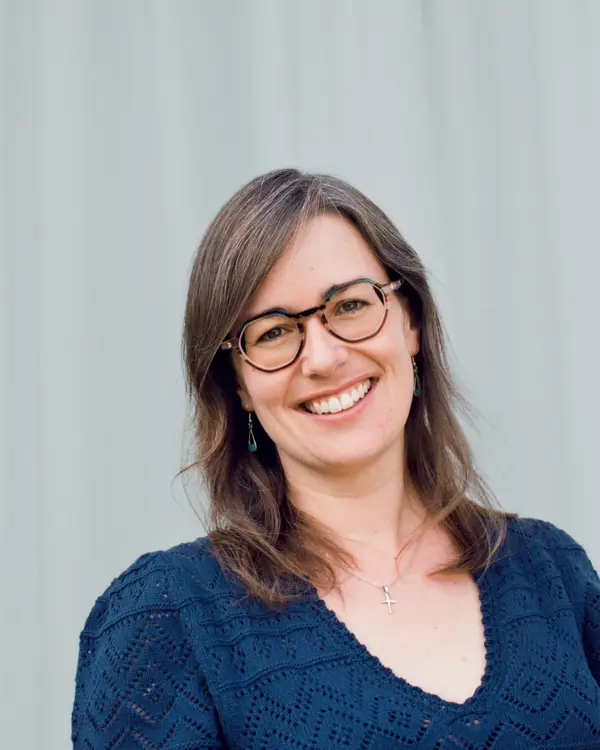
“Plants are the foundation of human life on Earth and are critical for securing our future. Recent advances in genetic technologies and synthetic biology can be unified to push the limits of what’s possible in plant science, to develop resilient crops and ecosystems for tomorrow’s world.”
Angie Burnett
Programme Director